

Blog
What are Microplastics and Why are They in Your Home's Air
You can’t see them, you can’t feel them, but they’re in your home. Microplastics are the newest indoor air quality (IAQ) concern, and for good reasons. These small bits of plastic range in size from five millimeters to one nanometer, and new studies estimate that adults breathe in around 68,000 microplastic particles every day from indoor air.
These little pieces of plastic sneak into your home and wreak havoc on your health and even your machinery. Homeowners need to know what indoor microplastics are, how they get in, and how to get rid of them.
Sources of Microplastics Indoors
First off, microplastics are everywhere. Researchers have found microplastics in fish, vegetables, cosmetics, indoor air, and even in breast milk. They are the result of plastic waste and byproducts. For example, plastic cannot decompose quickly, so as plastic ages, it doesn't disappear. It degrades into smaller and smaller plastics, becoming literally “micro” over time.
Since over 460 million metric tons of plastic are produced every year, this micro waste has spread. Homeowners cannot get rid of it. What homeowners can do is limit their exposure to microplastics. To do this, you need to know what the primary indoor microplastic sources are:
- Synthetic clothing and textiles: Plastic carpets, toys, and linens are big culprits.
- Plastic packaging: One-time-use plastics break down quickly into microplastics.
- Cleaning products: Especially products with scrubbing beads.
You also bring microplastics inside on your person. For example, there are higher concentrations of these plastics in vehicles and in places like stadiums (due to plastic turfing).
How They Become Airborne
These tiny bits of plastic weigh very little, so it doesn’t take much for them to become airborne. People moving through the home, decorating, playing with pets; all these activities can send dust and microplastics into the air.
The primary airborne culprit may be your HVAC system. HVACs are designed to push hot or cool air through your home, keeping the temperatures safe and comfortable. The problem is that when your HVAC systems are dirty or lack proper filters, they can send microplastics along with cooling/warming air.
Once in the air, these plastics are inhaled and eaten by your family and friends.
Health Effects
There isn’t enough data to definitely determine the health effects caused by microplastics alone. The data we do have suggests that microplastics are harmful, and we know that once ingested or inhaled, chemicals from these plastics can leach into organs.
Some studies have linked microplastics to health issues, such as:
- Cancer
- Heart attacks
- Reproductive problems
- Digestive and respiratory issues
- Sleep apnea
Microplastics and dust are also irritants that exacerbate respiratory irritation and allergies.
How to Reduce Microplastics
You can start reducing microplastics in your home by purchasing more durable, reusable products that are made with natural materials. Not only is it better for your health, but these goods last longer than their cheaper plastic alternatives.
Next, you can take the following cleaning and filtration steps to limit in-home microplastics.
- Air Filtration Systems: Use air purifiers equipped with HEPA filters to help capture airborne microplastics, dust, and other particulate matter circulating indoors.
- Improved Ventilation: Open windows when possible to bring in fresh air, and keep up with routine dusting and vacuuming to reduce microplastic buildup on surfaces and floors.
- Cleaned Filtration: Replace HVAC, air purifier, and vacuum filters on the recommended schedule to ensure your home’s filtration systems continue trapping microplastics effectively.
Finally, the best way to remove air quality contaminants is by making your air-circulating system inhospitable to microplastics. This means addressing your HVAC.
Role of HVAC Systems
Your HVAC system has a major impact on your everyday comfort. When it’s running properly, it delivers steady temperatures, fresher air, and more predictable energy costs.
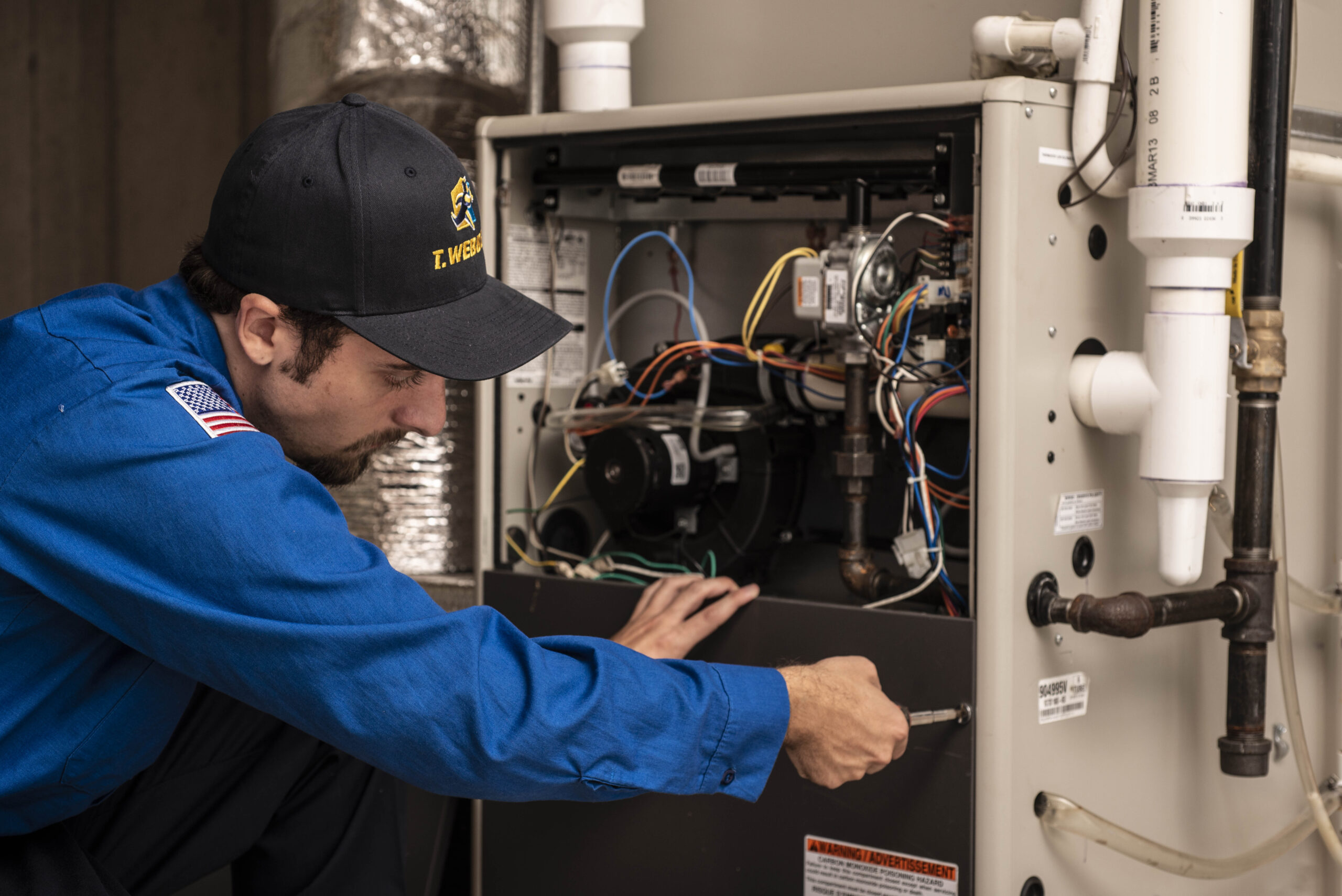
A well-functioning, well-maintained HVAC unit can also remove dust and microplastics in home air. Technicians can take the following steps to limit pollutants in your home.
- Duct cleaning remove dusts and debris
- Air filters trap and remove airborne particles, such as dust, pollen, and pet dander
- Air purifiers and air cleaners capture pollutants, allergens, and odors
Why Choose T.Webber
Poor indoor air quality can have a serious effect on your health and is especially damaging for young children, pets, and the elderly. At T.Webber, we understand the need for pristine air with limited contaminants. Depending on the issues you’re experiencing, we may recommend and carry out one or more of the following solutions:
- Air Filters: High-quality filters trap airborne particles, improving overall air quality.
- Air Purifiers and Cleaners: These devices capture pollutants, allergens, and odors to create a cleaner, healthier environment throughout your home.
- Duct Cleaning: A professional cleaning of your HVAC ducts removes built-up dust, debris, and contaminants, helping restore healthier indoor air.
- Ventilators: Ventilators mix indoor and outdoor air to help achieve the ideal indoor temperature and balance.
- Humidifiers or Dehumidifiers: A whole-house humidifier or dehumidifier adds or removes moisture depending on your needs.
- UV Lamps: Ultraviolet lamps operate quietly to help destroy bacteria and mold, enhancing the cleanliness of your air.
We provide honest, helpful recommendations and installations to help you create a clean, safe home environment.
Schedule Air Quality Evaluation
Clean, healthy indoor air is essential for year-round comfort and safety. If you need indoor air quality services in the Hudson Valley, Poughkeepsie, or Westchester, the professionals at T. Webber are here to help. We can evaluate your home, air quality, and HVAC system, developing a step-by-step plan to clear your indoor air.
Call us at (845) 443-4815 to schedule your appointment today.